
Research Overview
On October 2, 2020, the official managing the local electoral management body in Lake County, Florida posted a message on the jurisdiction’s official Facebook page correcting misinformation about mail ballot signature requirements that was circulating on social media. It was a small act— a single post from a single official in a single county amidst 10,000 other local jurisdictions. But it was also a microcosm of something much larger: an election official using the tools available to them to tell the public the truth about how voting works and elections are secured, without being asked to, in the midst of one of the most contentious election cycles in American history.
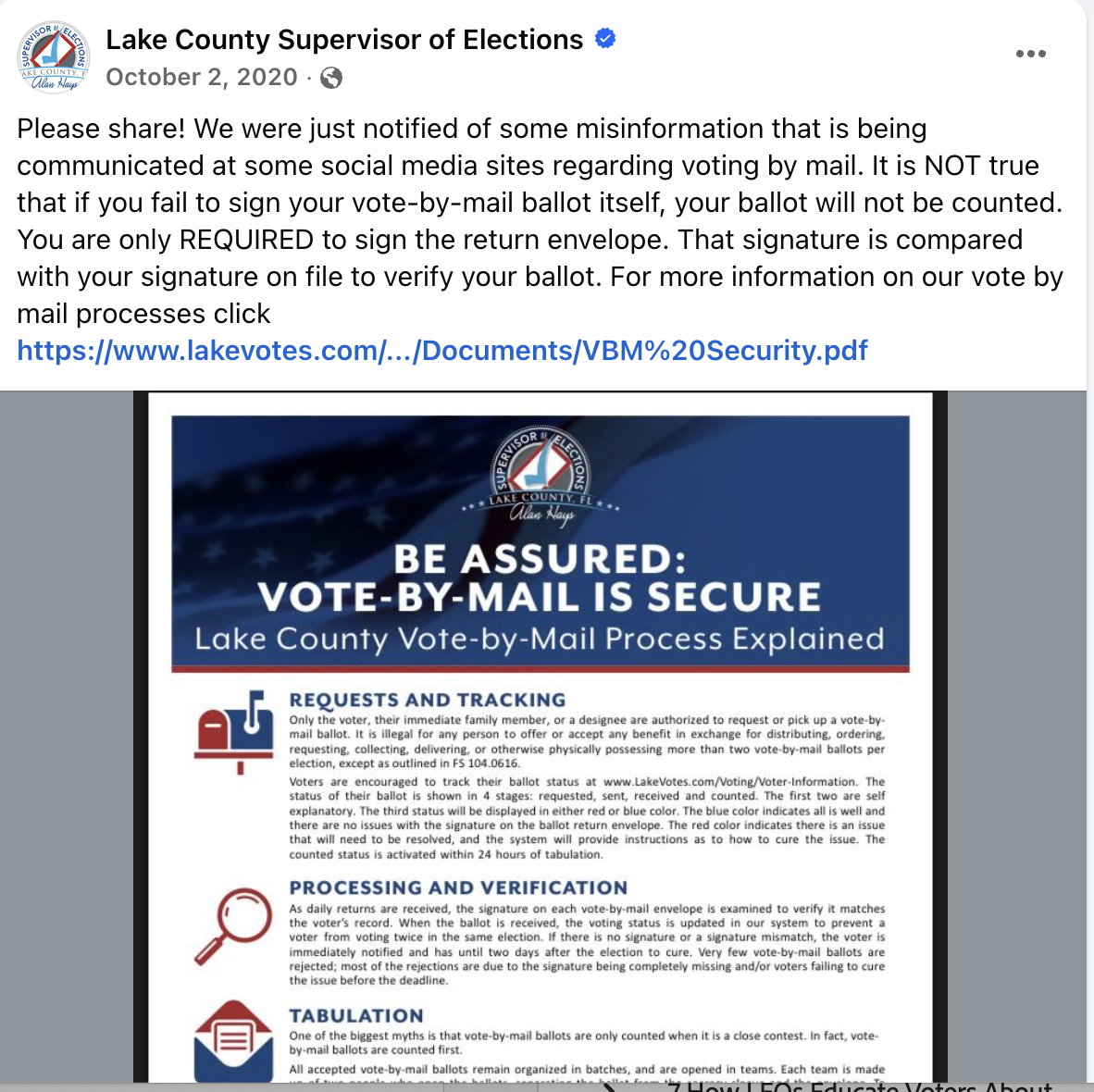
This post is one of the more the 120,000 I have now collected and analyzed with my research team over the last six years. And the question it raises— why do election officials engage in voter education and outreach at all— whether it works, and what it means for democratic resilience writ large— is the question that organizes my research.
Intellectual Foundation
Trained in American Political Development during my Ph.D. at Northwestern University, I am interested in elections not simply as behavioral events, but as the products of constitutional arrangements, federal and state law, and long historical processes of institutional change. The decentralization of election administration in the United States, grounded in Article I, Section 4, Clause 1 of the U.S. Constitution and shaped by landmark federal interventions including the Voting Rights Act, the National Voter Registration Act, and the Help America Vote Act, is not background context for my research. It is the subject of it.
Within this framework, my particular focus is on the public servants who sit at the intersection of election law and citizen: the election officials, workers, and electoral management bodies who translate the rules governing American elections into the lived experience of voting. These intermediaries of democracy do not make election law. In fact, they are often neglected in the process of passing election policy. But they determine—through the choices they make about how to communicate and explain those laws—whether voters can successfully exercise their right vote, identify election misinformation when they see it, and understand the administrative process by which their votes are translated into collective voice and representation. Addressing these questions are not only a general matter of importance for a healthy democracy, but are of urgent matter for a democratic system bending under the weight of authoritarian encroachment on fact, truth, and the democratic process
The Research Program
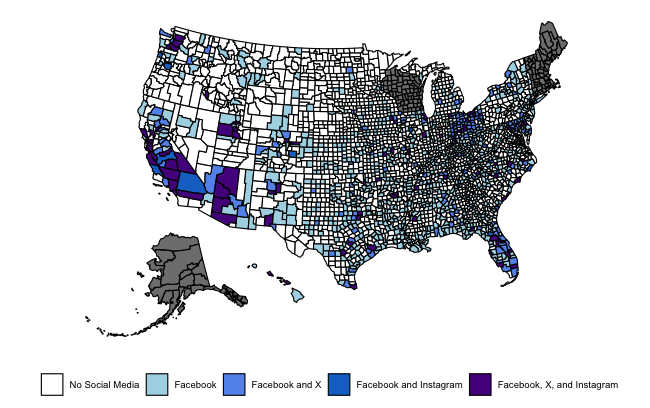
U.S. County-Level Election Office Presence on Social Media (2024 Election Official Communication Tracker)
My current research program develops and tests a theoretical framework I call fractal resilience to understand how local, interconnected public servants and civic actors in decentralized systems can educate and coordinate to build a web of democratic resilience. My book project develops this framework through the lens of a largely overlooked development in American election administration. Beginning with the 2000 U.S. presidential election meltdown in Florida, in response to ongoing systemic shocks like coordinated misinformation campaigns and the COVID-19 pandemic—the over 10,000 state and local electoral management bodies in the United States have emerged as active public educators of how elections are run and secured. Largely in the absence of centralized policy mandates, they have iteratively and collectively built a grassroots architecture of voter education: outreach like ballot previews, machine demonstrations, multilingual education materials, social media trust-building campaigns, and community partnerships with entities ranging from libraries and houses of worship, to breweries and professional sports teams.
Fractal resilience describes this phenomenon: the emergence across a radically decentralized system with no single hierarchy and no shared jurisdiction, of self-similar, values anchored practices of democratic stewardship. These officials are not strategic actors seeking power or resources. They are public servants motivated by a democratic care-ethic, repeating and refining practices of education truth-telling in response to a succession of electoral shocks— the chaos of the 2000, the polarization of 2016, the disinformation crisis of 2020— until those practices became constitutive of election administration in the United States. In doing so, they have constructed what I call architectures of truth: locally rooted but nationally patterned commitments to transparency that, where robust, demonstrably strengthen public resilience to misinformation and authoritarian encroachment on democratic reality.
This framework is the foundation of my current book project, The Right (To Know How) To Vote: Voter Education and Fractal Resilience in American Democracy. It is also the animating theory behind two ongoing empirical projects: the Election Official Communications Tracker and the National Election Knowledge Survey. It has been developed through a series of peer-reviewed articles and public-facing projects that measure and assess the presence and impact of state and local election officials’ voter education efforts on public access to the ballot, their understanding of how elections are administered and secured in the United States, and public confidence in election outcomes.
Research Across Channels
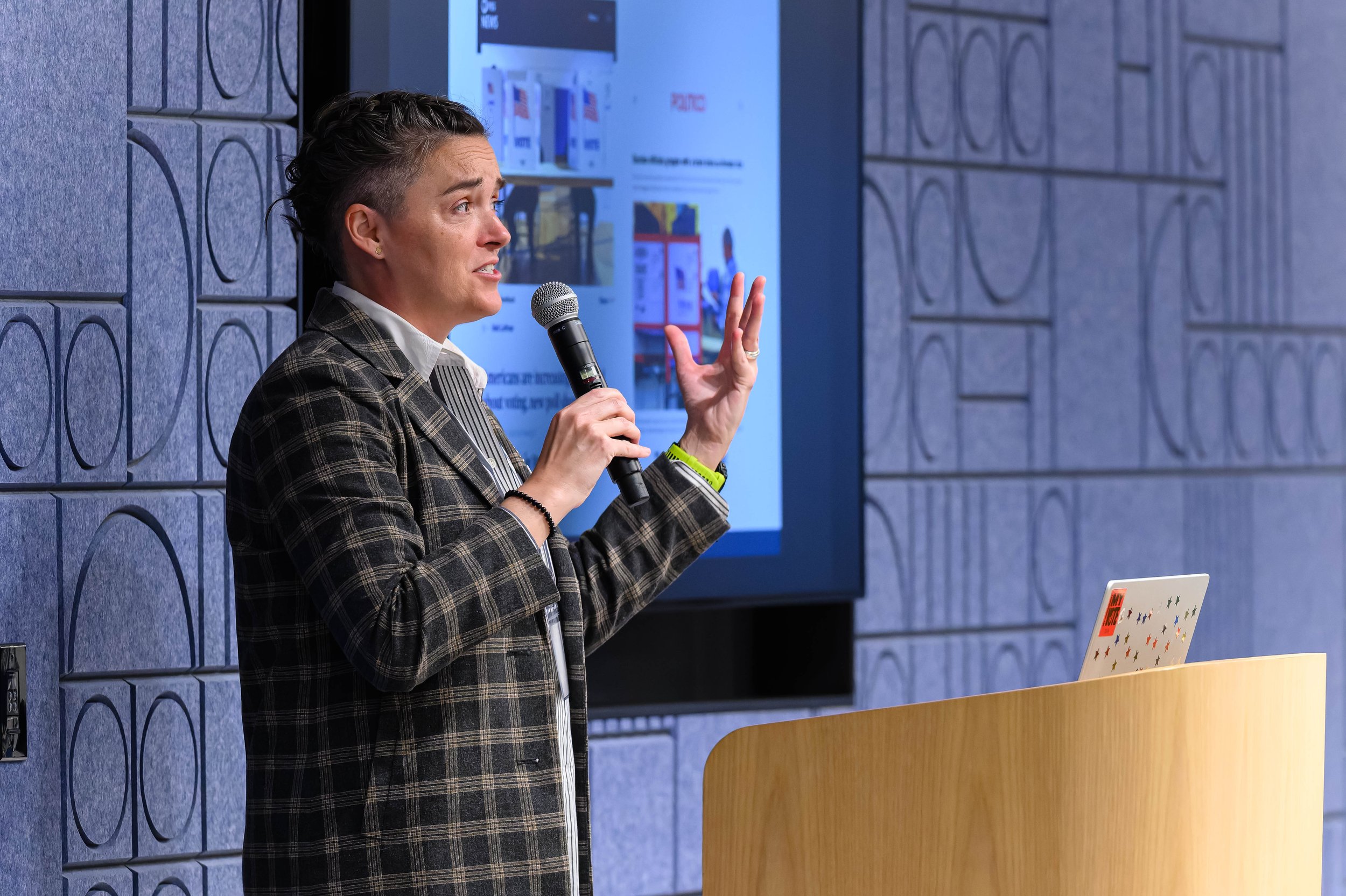
A defining feature of this research program is that it operates simultaneously across peer-reviewed, policy, and practitioner channels— not as separate activities, but as integrated expressions of the same scholarly project. In addition to my peer-reviewed work published in general and sub-field specific outlets like Political Communication and Election Law Journal, my research has informed election official communication guides, contributed to testimony before the U.S. Election Assistance Commission, and generated practitioner facing reports for organizations including the Bipartisan Policy Center and the University of Maryland Center for Democracy and Civic Engagement. I have organized and participated in events reaching hundreds of election officials, delivered a keynote address at the 2025 New York Election Cybersecurity Summit, and write regularly for public facing outlets including the Washington Post, the Conversation, and the Wall Street Journal.
The questions this research pursues— about institutional change, democratic resilience, and the conditions under which centralized systems can sustain themselves under authoritarian pressure— extend well beyond election administration. They are questions about how democracy defends itself. And they have never been more urgent.