
In the final days leading up to the 2026 midterm elections, voters remain at risk.
In the lead up to the 2026 midterm elections, a slew of executive orders and lawsuits have thrown questions about voting options and requirements up in the air for voters and election officials across the country. This ever-changing information environment creates uncertainty for voters, increasing the risk they will make mistakes that could nullify their vote. It also adds to the already heavy workload of election officials who work around the clock to administer the election, and make sure their voters have the information they need to successfully vote and have confidence in the election outcomes. If people don’t know the “rules of the game,” about how to actually participate in elections, they can’t effectively play the game.
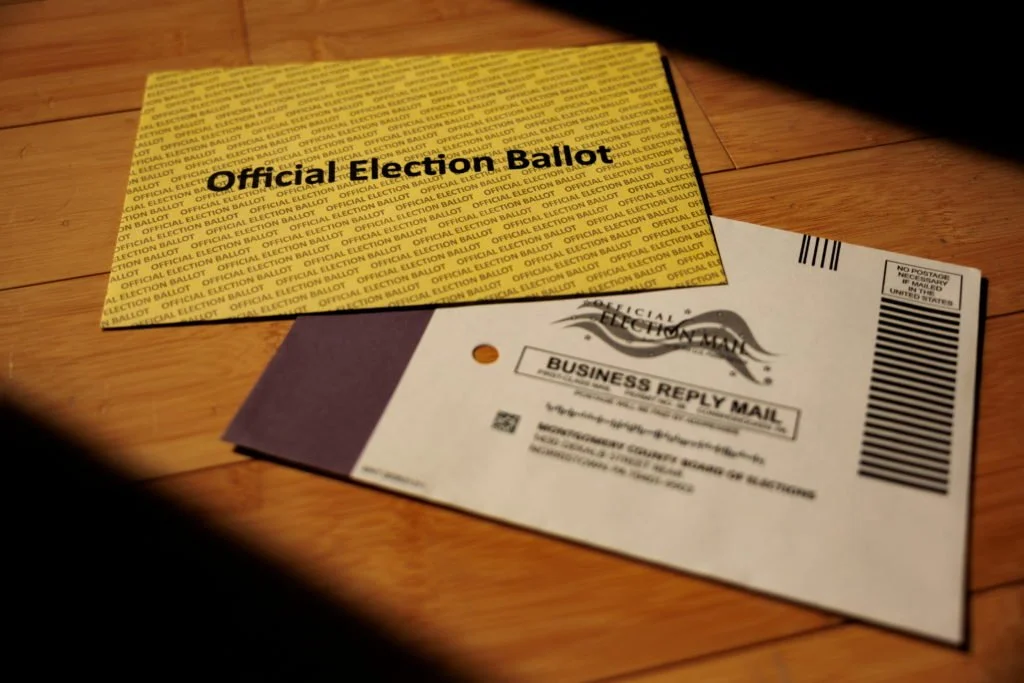
A mail-in ballot, during the Pennsylvania primary election, is displayed in this illustration picture taken in Philadelphia, Pennsylvania, May 19, 2026. Illustration by Hannah Beier/Reuters
Understanding what the public knows—and doesn’t know—about how to successfully cast a ballot is a necessary step for identifying where the information needs are greatest. To identify election information needs, Team Election Knowledge has been measuring public knowledge of election laws across the country in a series of different surveys for the past two years. This election cycle, we fielded a survey between October 23 and 30, 2026 asking a national panel what they know about key election laws in their own state. In this write up, we concentrate on mail voting rules—whether no-excuse mail voting is an option, whether mistakes on mail ballots can be fixed, and the deadline for returning a mail ballot.
If you click here, you can preview some of the topline findings, and what they signal in the final days of the 2026 midterm election cycle.
